
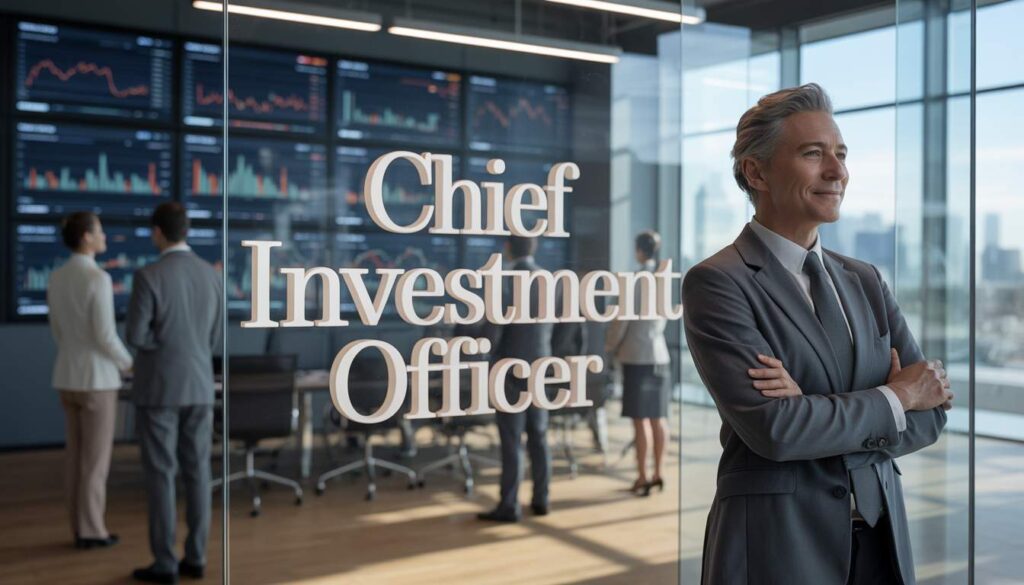
Have you ever wondered what it takes to steer the financial ship of a massive organization through turbulent markets? As someone who’s spent years in the finance world, chatting with executives and analyzing investment trends, I can tell you that the role of a Chief Investment Officer is both thrilling and demanding. It’s not just about picking stocks or bonds; it’s about shaping the future of an entire entity.
In this post, we’ll break down the essentials of being a Chief Investment Officer, from crafting smart strategies to managing risks and understanding core responsibilities. Whether you’re aspiring to this position or just curious about how top investors operate, let’s walk through it together.
What Makes a Chief Investment Officer Stand Out?
Think about the leaders who guide billions in assets. A Chief Investment Officer, often called a CIO, sits at the helm of investment decisions for corporations, pension funds, endowments, or even tech giants. Their job involves blending vision with precision, ensuring every move aligns with long-term goals.
From my own experiences attending industry conferences, I’ve seen how these professionals balance gut instinct with data-driven choices. Take the Allstate Chief Investment Officer, for instance—they oversee a portfolio that protects against economic shifts while seeking growth. It’s a role that requires not only financial acumen but also the ability to inspire teams.
One story that sticks with me is from a mentor who once held a similar position at a mid-sized firm. He shared how a single overlooked market signal nearly derailed their strategy during a downturn. That taught me the value of vigilance, something every Chief Investment Officer must embody.
Also Read: Lessinvest.com: Top Techniques to Secure Profitable Returns.
Key Traits of Successful Chief Investment Officers
What sets top CIOs apart? It’s a mix of skills honed over years. First, they possess deep market knowledge, staying ahead of trends like sustainable investing or geopolitical impacts. They also excel in communication, translating complex ideas into actionable plans for boards and stakeholders.
Consider the Google Chief Investment Officer, who manages investments in innovative tech ventures. Their approach highlights adaptability, pivoting quickly in a fast-paced sector. If you’re eyeing this career, focus on building resilience—markets don’t forgive hesitation.
In conversations with aspiring finance pros, I often hear worries about burnout. The pressure is real, but successful CIOs prioritize work-life balance, perhaps through hobbies like hiking or reading non-finance books. It’s about sustaining energy for those high-stakes decisions.
Building Effective Investment Strategies as a Chief Investment Officer
Strategy forms the backbone of a Chief Investment Officer’s work. It’s where vision meets execution, turning abstract goals into tangible returns. I’ve watched friends in the field craft plans that weathered recessions, and it always starts with clear objectives.
A solid strategy begins with assessing the organization’s risk tolerance and time horizon. For example, a pension fund might favor stable bonds, while a venture arm seeks high-growth equities. The Chief Investment Officer must align these with broader economic forecasts.
I remember advising a startup on their first investment policy—it was eye-opening how small tweaks in asset allocation boosted confidence. Strategies aren’t static; they evolve with data from tools like portfolio analytics software.
Asset Allocation Tactics for Chief Investment Officers
Asset allocation is a core tool in a CIO’s kit. It involves distributing investments across stocks, bonds, real estate, and alternatives to optimize returns while controlling volatility.
Look at how the Outsourced Chief Investment Officer model helps smaller firms. By bringing in external expertise, organizations gain access to sophisticated tactics without building an in-house team. This approach saved one client I know from costly missteps during volatile periods.
Diversification plays a big part here. Spreading investments reduces exposure to any single asset’s failure. Chief Investment Officers often use models like Modern Portfolio Theory to guide this, adjusting based on real-time data.
Also Read: Lessinvest.com Invest: Powerful Tips for Profitable Gains.
Incorporating ESG Factors into Strategies
Environmental, Social, and Governance (ESG) criteria have become non-negotiable. A Chief Investment Officer ignoring them risks backlash from stakeholders. I’ve seen funds thrive by integrating ESG, like prioritizing companies with strong sustainability records.
For instance, the Allstate Chief Investment Officer has emphasized responsible investing, aligning with corporate values. If you’re in this role, start by auditing your portfolio for ESG alignment—it’s not just ethical; it drives long-term performance.
Sharing a quick anecdote: During a panel discussion, a CIO recounted shifting to green bonds amid climate concerns. The move not only met investor demands but also yielded solid returns. It’s proof that strategy with purpose pays off.
Managing Risk: The Chief Investment Officer’s Core Challenge
Risk management isn’t about avoiding danger—it’s about navigating it wisely. As a Chief Investment Officer, you’re the guardian against potential losses, using tools and foresight to protect assets.
From my time consulting on risk frameworks, I’ve learned that complacency is the biggest enemy. Markets can turn on a dime, so constant monitoring is key. Think about stress testing portfolios against scenarios like inflation spikes or recessions.
One common pain point I hear from executives is balancing growth with safety. It’s tough, but effective CIOs use derivatives like options or futures to hedge bets without sacrificing upside.
Identifying and Mitigating Market Risks
Market risks stem from fluctuations in prices, interest rates, or currencies. A skilled Chief Investment Officer employs quantitative models to spot these early.
Consider the Google Chief Investment Officer, who deals with tech sector volatility. Their strategies often include scenario planning, preparing for disruptions like regulatory changes.
In my network, I’ve heard stories of CIOs using AI-driven analytics to predict risks. It’s transformed how they operate, turning data into defensive shields.
Also Read: Lessinvest.com Real Estate: Profitable Market Strategies.
Operational and Compliance Risks for Chief Investment Officers
Beyond markets, operational risks—like system failures or human errors—loom large. Compliance with regulations adds another layer, especially in global portfolios.
Outsourced Chief Investment Officers shine here, bringing specialized knowledge to ensure adherence without overwhelming internal resources. I once helped a firm transition to this model, and it streamlined their compliance processes dramatically.
Addressing reader concerns: If you’re worried about legal pitfalls, build strong relationships with legal teams. It’s about proactive steps, not reactive fixes.
The Evolving Roles of a Chief Investment Officer
The role of a Chief Investment Officer has expanded beyond traditional boundaries. Today, it’s about leadership, innovation, and stakeholder engagement.
In my career, I’ve seen CIOs become strategic advisors to CEOs, influencing overall business direction. They’re not just number crunchers; they’re visionaries.
For example, at Allstate, the Chief Investment Officer contributes to enterprise-wide decisions, blending investments with operational goals.
Leadership and Team Management
Leading investment teams requires soft skills. A great CIO fosters collaboration, mentoring analysts and portfolio managers.
I recall a workshop where a seasoned CIO shared how empowering his team led to breakthrough ideas. It’s about creating a culture where questions are encouraged.
If you’re stepping into this role, focus on delegation—trust your experts while providing guidance.
Also Read: LessInvest.com Crypto Guide: Insider Profitable Tactics.
Technology Integration in the Chief Investment Officer’s Toolkit
Tech is reshaping the field. From blockchain to machine learning, CIOs must stay current.
The Google Chief Investment Officer exemplifies this, leveraging data analytics for smarter decisions. Adopting tools like robo-advisors can enhance efficiency.
A personal tip: Start small, perhaps with cloud-based platforms, to integrate tech without disruption.
Compensation Insights: Chief Investment Officer Salary Trends
Let’s talk numbers—because who doesn’t wonder about pay in such a pivotal role? Chief Investment Officer salary varies by organization size, location, and experience.
Entry-level CIOs at smaller firms might earn around $200,000 annually, but at major corporations, it climbs to $500,000 or more, plus bonuses tied to performance.
Factors like managing outsourced services can influence this. An Outsourced Chief Investment Officer often commands premium fees for their expertise.
From discussions with peers, I’ve noted that total compensation includes equity stakes, especially in tech firms like Google. It’s rewarding, but tied to results.
If salary is a motivator for you, aim for certifications like CFA to boost your earning potential.
Negotiating Your Chief Investment Officer Package
When negotiating, highlight your track record. Bonuses can make up 50% of pay, so push for clear performance metrics.
One executive I know secured a better deal by emphasizing past returns. It’s about value demonstration.
Case Studies: Real-World Chief Investment Officer Successes
Real examples bring theory to life. Let’s look at a few.
The Allstate Chief Investment Officer navigated the 2020 market crash by shifting to defensive assets, preserving capital.
Similarly, Google’s approach under their Chief Investment Officer has fueled innovation investments, yielding high returns.
An Outsourced Chief Investment Officer helped a nonprofit endowment grow 15% annually through tailored strategies.
These stories show adaptability in action. What can you learn? Stay flexible and data-focused.
Preparing for a Career as a Chief Investment Officer
Aspiring to this role? Build a foundation in finance, gain experience in portfolio management, and network relentlessly.
I started with internships, learning from mentors. Certifications and MBAs help, but real-world exposure is gold.
Address common fears: Imposter syndrome hits hard, but remember, every CIO started somewhere. Seek feedback and keep learning.
Educational Pathways and Certifications
Degrees in economics or finance are common, but ongoing education matters more. CFA or CAIA credentials signal expertise.
Online courses on platforms like Coursera can fill gaps without full-time commitment.
Future Trends for Chief Investment Officers
Looking ahead, sustainability and AI will dominate. CIOs must adapt to climate-focused investing and automated tools.
Geopolitical shifts, like trade tensions, will require agile responses.
In my view, the role will become more interdisciplinary, blending finance with tech and ethics.
Wrapping Up Your Journey into the Chief Investment Officer World
We’ve covered a lot—from strategies and risks to roles and salaries. Being a Chief Investment Officer is challenging, but incredibly fulfilling for those passionate about finance.
If this sparks your interest, take that first step: Read industry reports, connect with professionals, or even shadow a CIO.
What’s your take? Share in the comments—let’s keep the conversation going.
For more useful articles, visit my website: Lessinvest.com.